Jumbo Mortgage Options We Offer Self-Employed Borrowers in Miami-Dade County
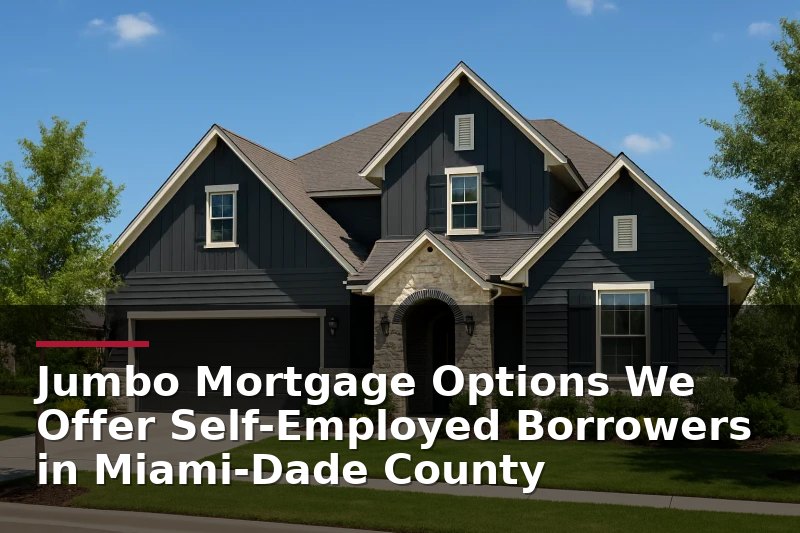
Qualifying for a jumbo mortgage can feel more complicated when your income comes from a business, multiple accounts, or variable monthly deposits.
Self-employed borrowers can qualify for jumbo mortgages using full documentation or alternative income methods, such as bank statements, depending on occupancy, property, reserves, credit, and lender guidelines.
In this guide, we’ll explain the jumbo mortgage options available to self-employed borrowers, how lenders review income, and what to expect when financing a higher-priced property in Miami-Dade County.
Key Takeaways
- Loan Purpose: Jumbo mortgages finance loan amounts above the applicable conforming loan limit for the property’s county.
- Income Options: Self-employed borrowers may qualify with tax returns, personal or business bank statements, asset-based income, or other approved documentation.
- Requirements: Lenders commonly review credit, liquidity, reserves, business stability, occupancy, and the property itself.
- Timeline: The process varies based on documentation, appraisal complexity, property type, and lender review.
- Best For: These options may fit business owners and entrepreneurs purchasing or refinancing higher-priced Miami-Dade properties.
Quick Answers
- What makes a mortgage jumbo? A mortgage is generally considered jumbo when its loan amount exceeds the current conforming loan limit for the county.
- Do self-employed borrowers need tax returns? Not always. Some programs use tax returns, while alternative income verification programs may use bank statements or other approved documentation.
- Can business bank statements be used? Yes, certain lenders allow business bank statements, but they may apply an expense factor before calculating qualifying income.
- Can DSCR financing be used for a Miami investment property? Potentially. DSCR programs qualify eligible investment properties primarily through rental cash flow rather than the borrower’s personal employment income.
At Vantage Mortgage Corporation (NMLS# 2489862), we help self-employed borrowers compare jumbo and non-QM options through a network of lending partners. Our goal is to provide clear information, review the full scenario, and structure financing around the borrower’s income, property, and long-term plans.
What Is a Jumbo Mortgage?
A jumbo mortgage is a residential loan that exceeds the conforming loan limit established for the property’s county. Conforming loan limits can change, and higher limits may apply in designated high-cost areas. Borrowers should verify the current Miami-Dade County limit before deciding whether a loan falls into the conforming or jumbo category.
Jumbo loans are not purchased under the same standard conforming framework as conventional loans within county limits. As a result, lenders establish their own credit, reserve, income, and property guidelines. These requirements can vary significantly between programs.
That difference matters for self-employed borrowers. A business owner may receive different qualifying results from two lenders using the same financial information because each lender may calculate income, business expenses, or liquidity differently.
Jumbo Mortgage Options for Self-Employed Borrowers
Full-Documentation Jumbo Loans
A full-documentation jumbo loan typically evaluates personal and business tax returns, year-to-date financial statements, and other standard income records. The lender may average income over the applicable review period and examine whether earnings are stable, increasing, or declining.
This option may work well when tax returns accurately reflect the borrower’s available income. It can also provide access to more traditional jumbo pricing and terms, although the final structure depends on credit, occupancy, assets, property type, and current market conditions.
Taxable income is not always the same as business cash flow. Certain non-cash expenses may be added back when permitted, while recurring obligations or business losses may reduce qualifying income. The calculation depends on the business structure and lender guidelines.
Bank Statement Jumbo Loans
Bank statement jumbo loans use eligible deposits over a defined review period to estimate income instead of relying primarily on tax-return income. Depending on the program, the lender may review personal accounts, business accounts, or both.
Business deposits are not automatically treated as personal income. Lenders generally apply an expense factor or review documentation supporting the company’s operating expenses. Transfers between accounts, borrowed funds, and deposits that cannot be tied to normal business activity may be excluded.
Our Bank Statement Loans program overview explains how alternative income verification may help borrowers whose tax returns do not fully represent their current cash flow.
Asset-Based or Asset-Depletion Jumbo Loans
Some jumbo programs allow eligible assets to be converted into monthly qualifying income through an asset-depletion calculation. The lender typically subtracts funds needed for closing, required reserves, and any assets that are not eligible under the program before completing the calculation.
This structure may be useful for a borrower with substantial liquid or investment assets but limited documented monthly income. Retirement accounts, brokerage accounts, and other assets may receive different treatment based on access, ownership, and program rules.
Asset-based qualification does not mean that credit, property eligibility, or reserves are ignored. It changes the method used to document income, not the lender’s full risk review.
DSCR Financing for Investment Properties
A debt service coverage ratio loan evaluates whether an investment property’s qualifying rental income can support its housing expense. Personal employment income is generally not the primary qualification method, which can make this structure relevant for self-employed real estate investors.
DSCR financing is designed for eligible non-owner-occupied properties. The lender may review the appraiser’s market rent, an existing lease, property expenses, credit, reserves, and the proposed loan terms. Short-term rental income may be considered by some programs, but documentation standards and calculations vary.
Borrowers evaluating rental property financing can review our DSCR loan program for a broader explanation of the structure.
How Jumbo Lenders Calculate Self-Employed Income
The right documentation does not help unless the income is calculated correctly. Lenders generally look beyond gross revenue and focus on income that is stable, recurring, available to the borrower, and likely to continue.
- Confirm the business structure. A sole proprietorship, partnership, S corporation, and corporation each produce different tax and income documents.
- Review the income period. The lender determines the required history and whether current performance supports prior earnings.
- Identify eligible revenue. Deposits or reported income must generally connect to normal business activity.
- Account for expenses. Business expenses may be taken from tax documents, calculated through an expense factor, or supported by other approved records.
- Evaluate trends. Stable or increasing income is usually easier to support than declining income. A decline may require an explanation and additional documentation.
Agency requirements, jumbo investor guidelines, and individual lender overlays are not the same. A lender overlay is an additional requirement imposed by a particular lender. It should not be treated as a universal jumbo mortgage rule.
Comparing Self-Employed Jumbo Loan Structures
| Loan Structure | Primary Qualification Method | Potential Advantage | Key Tradeoff |
|---|---|---|---|
| Full Documentation | Tax returns and standard financial records | Uses established income documentation | Taxable income may be lower than actual cash flow |
| Bank Statement | Eligible personal or business deposits | May better reflect current business revenue | Expense factors and deposit exclusions apply |
| Asset Depletion | Eligible assets converted into monthly income | Can support borrowers with significant assets | Not every asset is eligible or counted equally |
| DSCR | Investment property rental cash flow | Does not primarily rely on employment income | Limited to eligible investment property scenarios |
Miami-Dade Property Factors That Can Affect Approval
Income qualification is only one part of a jumbo mortgage. The property must also meet the lender’s requirements, and Miami-Dade County presents several details that should be reviewed early.
Insurance, Taxes, and Flood Exposure
Property taxes, homeowners insurance, flood insurance when required, and association dues affect the total housing payment. These costs can materially change debt-to-income or DSCR calculations, especially for higher-value properties.
Insurance availability and premiums vary by property. A reliable estimate should be obtained before finalizing the loan structure rather than relying only on a preliminary payment based on principal and interest.
Condominium Review
Brickell condos, Miami Beach properties, and other condominium purchases may require a separate project review. The lender may evaluate the association’s budget, insurance, litigation, assessments, reserves, ownership concentration, and property use.
Borrower eligibility and condominium eligibility are separate decisions. A borrower may meet credit and income requirements while the project requires more documentation or does not meet a particular lender’s guidelines.
Appraisal Complexity
Luxury homes, waterfront properties in Coconut Grove, and unique Coral Gables homes may have fewer directly comparable sales. This can make the appraisal more detailed and may lead to additional review.
The appraisal supports the lender’s collateral decision. It does not guarantee that the contract price will be accepted as the property’s market value.
Documents to Prepare Before Applying
Organizing the file early helps us identify which jumbo structure fits the available documentation. Depending on the program, a self-employed borrower may be asked for:
- Personal and business tax returns when using full documentation
- Recent personal or business bank statements
- A year-to-date profit and loss statement or balance sheet
- Business formation, ownership, or licensing records
- Statements for checking, savings, retirement, or brokerage accounts
- Documentation for the down payment, closing funds, and reserves
- Current mortgage statements and property expense information
- Lease agreements or rental documentation for investment properties
- Purchase contract and property-specific documents
Large deposits, transfers, and recently opened accounts may require additional explanation. Keeping business and personal activity clearly documented can make the review more efficient.
Planning the Right Jumbo Mortgage Strategy
Strategic Financing starts with the full picture. We review the intended occupancy, purchase price, requested loan amount, credit profile, income method, liquidity, and property type before comparing available programs.
For some borrowers, full documentation produces the strongest structure. For others, a bank statement or asset-based program may provide a more accurate view of available income. Investors may find that an investment property loan better matches the property’s rental strategy.
As of 2026, jumbo and non-QM requirements continue to vary by lender and scenario. Rates, fees, reserve requirements, and documentation standards can change, so current terms should be verified before making a financing decision.
Review Your Miami-Dade Jumbo Mortgage Options
If you’re self-employed and considering a jumbo purchase or refinance in Miami-Dade County, we can help you compare documentation methods and understand the next steps. We also provide mortgage options throughout Florida and Texas for business owners, entrepreneurs, homebuyers, and real estate investors.
Call, text, or email us to review your scenario, compare available programs, and plan for pre-approval. Our focus is clear communication, transparent guidance, and financing structured around the property and your goals.
Frequently Asked Questions
Can business funds be used for a jumbo mortgage down payment or reserves?
Business funds may be eligible if the borrower has sufficient ownership and access to the account. The lender may also review whether withdrawing the funds could negatively affect business operations, and requirements vary by program.
How can a condominium assessment affect jumbo financing?
A special assessment may affect the borrower’s monthly obligations, required funds, or the lender’s review of the condominium project. The lender may request the assessment terms, association financial records, and evidence showing how the assessment will be paid.
Can a recent change in business structure affect qualification?
Yes. Changing from a sole proprietorship to a corporation, adding an owner, or reorganizing the business may require documentation showing continuity of ownership and income. The lender will evaluate whether the current business is a continuation of the prior operation or a new income source.
Are alternative documentation programs available for jumbo cash-out refinancing?
Some lenders offer bank statement, asset-based, or other non-QM options for eligible jumbo cash-out refinances. Maximum proceeds, acceptable uses, equity requirements, and documentation vary based on the lender, property, occupancy, and borrower profile.
Can a self-employed borrower use a jumbo mortgage for a second home?
Potentially, if the borrower and property meet the lender’s second-home guidelines. The lender may apply different reserve, occupancy, property-use, and income requirements than it would for a primary residence or investment property.
This is educational and not financial advice. Loan programs and guidelines can change. Talk with a licensed mortgage professional about your specific scenario.

Francisco Haedo-Blanco
Francisco Haedo is the founder of Vantage Mortgage Corporation and creator of Modern Monopoly brand. He specializes in DSCR loans, bank statement loans, investor financing, and mortgage solutions for self-employed borrowers throughout Florida and Texas.

Related Posts